


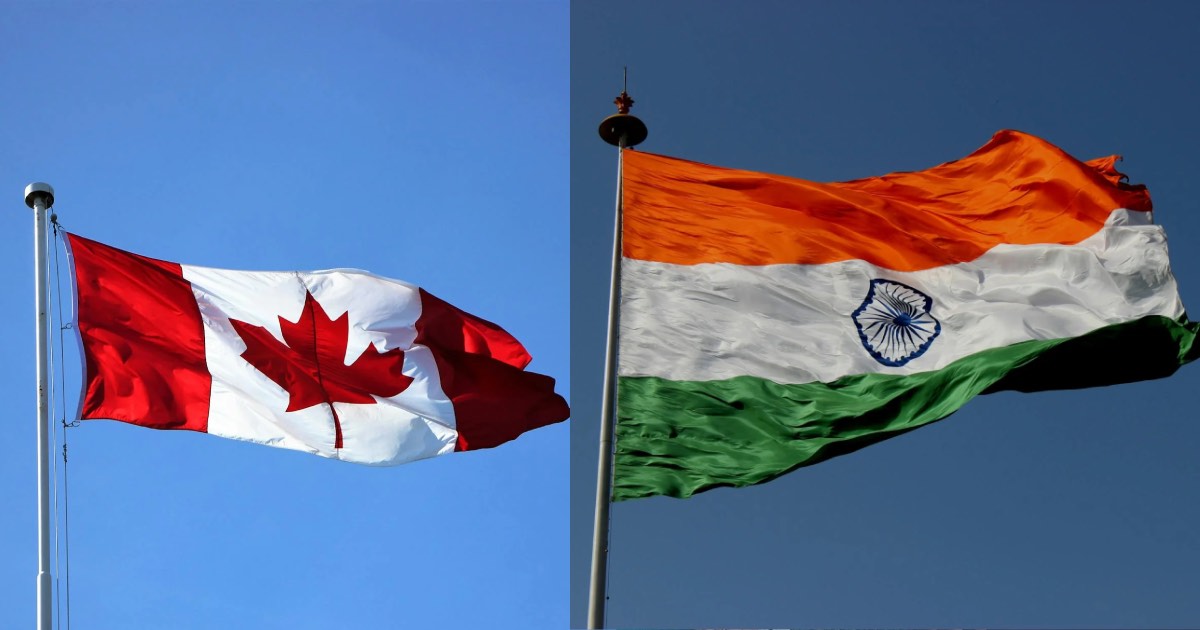
A longstanding diplomatic rift between India and Canada has escalated dramatically in recent weeks, drawing international attention to the strained relations between the two countries. The dispute centers around allegations by the Canadian government that Indian agents were involved in activities that threaten Canadian public safety, including the murder of Hardeep Singh Nijjar, a Sikh separatist leader, in British Columbia. This intensifying conflict has led to both nations expelling diplomats and raising concerns over the future of India-Canada relations.
Background of the Diplomatic Dispute
The tensions between India and Canada have been simmering for years, largely due to disagreements over the Khalistan movement, a Sikh separatist campaign that seeks to establish an independent Sikh state in the Punjab region of India. While the movement has lost momentum in India, it remains active within the Sikh diaspora, especially in countries like Canada, which is home to the largest Sikh community outside of India.
Hardeep Singh Nijjar, who was fatally shot by two masked gunmen outside a Sikh temple in Surrey, British Columbia, in June 2023, had been a prominent figure in the Khalistan movement. He was also the president of the temple and a vocal advocate for Khalistan, actively organizing referendums on the issue. India had long accused Nijjar of terrorism, alleging that he led a militant separatist group responsible for violent acts. His supporters, however, refuted these accusations, calling them politically motivated.
Canada’s Prime Minister Justin Trudeau shocked the international community in September 2023 when he publicly announced that Canadian authorities were investigating “credible allegations” of a possible link between Indian government agents and Nijjar’s assassination. India immediately rejected these allegations, calling them “absurd” and denying any involvement in Nijjar’s killing.
However, the situation took a more severe turn when the Royal Canadian Mounted Police (RCMP) uncovered new evidence in 2024, which, according to Trudeau, was “clear and compelling” and linked Indian agents to Nijjar’s assassination and other violent activities in Canada. The Canadian government responded by expelling six Indian diplomats, a move that further strained the already tense relations between the two nations.
Canada’s Allegations and Actions
On October 16, 2024, Prime Minister Trudeau held a press conference where he outlined the findings of the RCMP’s investigation. He stated that Indian agents had been involved in “clandestine information-gathering techniques” and “coercive behavior” that targeted South Asian Canadians. According to Trudeau, this included involvement in over a dozen violent acts, including Nijjar’s murder. He emphasized that the RCMP had gathered enough evidence to justify the expulsion of six Indian diplomats from Canada, including India’s high commissioner.
“This evidence cannot be ignored,” Trudeau said. “It leads to one conclusion: Indian government agents have engaged in activities that threaten the safety of Canadians. As a result, we have acted to protect our citizens.”
The RCMP’s investigation not only linked Indian agents to Nijjar’s assassination but also uncovered evidence of interference in democratic processes and other criminal activities. Canadian Foreign Affairs Minister Melanie Joly tied the expulsion of the diplomats directly to the Nijjar case, stating that the decision was made after ample evidence was gathered by Canadian authorities. “The targeting of Canadian citizens by foreign agents is unacceptable, and we will not tolerate it,” Joly said.
The expulsion of Indian diplomats marked the most significant step taken by Canada in response to the growing tensions between the two countries. In addition to expelling the diplomats, the Canadian government urged Indian officials to cooperate with law enforcement agencies to address the concerns raised by the investigation.
India’s Response and Counteractions
India’s Ministry of External Affairs reacted swiftly and with forceful denial to the Canadian accusations. On the same day that Canada announced the expulsion of Indian diplomats, India expelled six Canadian diplomats, including Canada’s acting high commissioner. In a statement, the ministry rejected Canada’s claims as “preposterous” and accused the Canadian government of pursuing a “deliberate strategy of smearing India for political gains.”
The Indian government has consistently denied any involvement in Nijjar’s assassination and has criticized the Canadian government for not providing concrete evidence to support its claims. According to India’s Ministry of External Affairs, Canada has failed to share any proof with Indian authorities, despite repeated requests. “We have not been provided with a shred of evidence by the Canadian government,” the ministry said in a statement.
India also withdrew its high commissioner and other diplomats from Canada, citing concerns over their safety. The ministry expressed its frustration with what it described as a deliberate campaign by the Canadian government to smear India’s image internationally. “The baseless targeting of Indian diplomats is unacceptable, and we reserve the right to take further steps in response,” the statement read.
In a tit-for-tat move, India announced that the six Canadian diplomats would have to leave the country by October 19, 2024. The Indian government has accused Trudeau’s administration of pandering to the country’s large Sikh community for political gain, especially with a federal election looming in Canada.
Historical Context of India-Canada Tensions
India-Canada relations have been rocky for several years, with the Khalistan issue being a major point of contention. India has repeatedly urged Canada and other Western nations to crack down on pro-Khalistan elements within their borders, accusing them of promoting separatism and encouraging violence in India’s Punjab region.
Canada, however, has maintained that it supports freedom of speech and the right to peaceful advocacy, which includes the right to promote the idea of Khalistan. This stance has put the Canadian government at odds with India, which views any support for the Khalistan movement as a threat to its sovereignty and security.
The situation escalated in 2023 when Prime Minister Trudeau first made public the investigation into Indian agents’ possible involvement in Nijjar’s assassination. India called the allegations “absurd” and claimed that Canada had a political compulsion to blame India due to the country’s sizable Sikh population.
Following the initial announcement, both countries withdrew diplomats and India temporarily suspended visa services for Canadian citizens. Although diplomatic relations briefly thawed when India resumed visa processing in October 2023, tensions resurfaced in 2024 with the latest revelations from the RCMP investigation.
Impact on India-Canada Relations
The latest developments in the India-Canada diplomatic row have cast a shadow over the future of bilateral relations. Both countries have deep-rooted economic and cultural ties, but the political fallout from this dispute could have long-lasting consequences.
India is Canada’s 10th largest trading partner, and bilateral trade between the two countries is valued at over $8 billion annually. The current diplomatic rift threatens to disrupt economic cooperation, especially in key sectors like technology, energy, and education.
Moreover, the large Sikh diaspora in Canada plays an influential role in Canadian politics, and any further escalation in tensions could have domestic political implications for Trudeau’s government. Canada has long been a destination for Indian immigrants, including students and professionals, and visa restrictions could impact the flow of people between the two nations.
For India, the accusations could strain its relationships with other Western allies if Canada succeeds in gaining international support for its claims. However, New Delhi remains firm in its position that the allegations are baseless and politically motivated.
The diplomatic row between India and Canada has escalated into a major international issue, with both sides expelling diplomats and trading accusations over alleged criminal activities. While Canada has presented evidence linking Indian agents to violent acts, including the assassination of Hardeep Singh Nijjar, India has vehemently denied any involvement and accused Canada of smearing its reputation for political gain.
As the situation unfolds, the future of India-Canada relations remains uncertain, with both nations entrenched in their positions. The Khalistan issue continues to be a significant point of contention, and unless a diplomatic solution is found, the fallout from this dispute could have far-reaching consequences for both countries.
Keywords: india canada news, india canada, canada india, india, canada india news, rcmp, khalistan, rcmp india, canada expels indian diplomats, india canada relations, canada expels indian diplomat, india news


